How to use
Types of tasks
Rigid objects with low variability
(Picking objects from uniform trays, inserting simple connectors, handling rigid parts)
Benefit: Faster setup for classical automation
Input: Briefly describe the task in free form. Dimensions and a 3D model are helpful. Use the teleoperation kit to quickly demonstrate the required waypoints.
Output: The AI integrator scans the setup and helps write classical automation code using advanced computer vision for object detection, pose estimation, and motion execution.

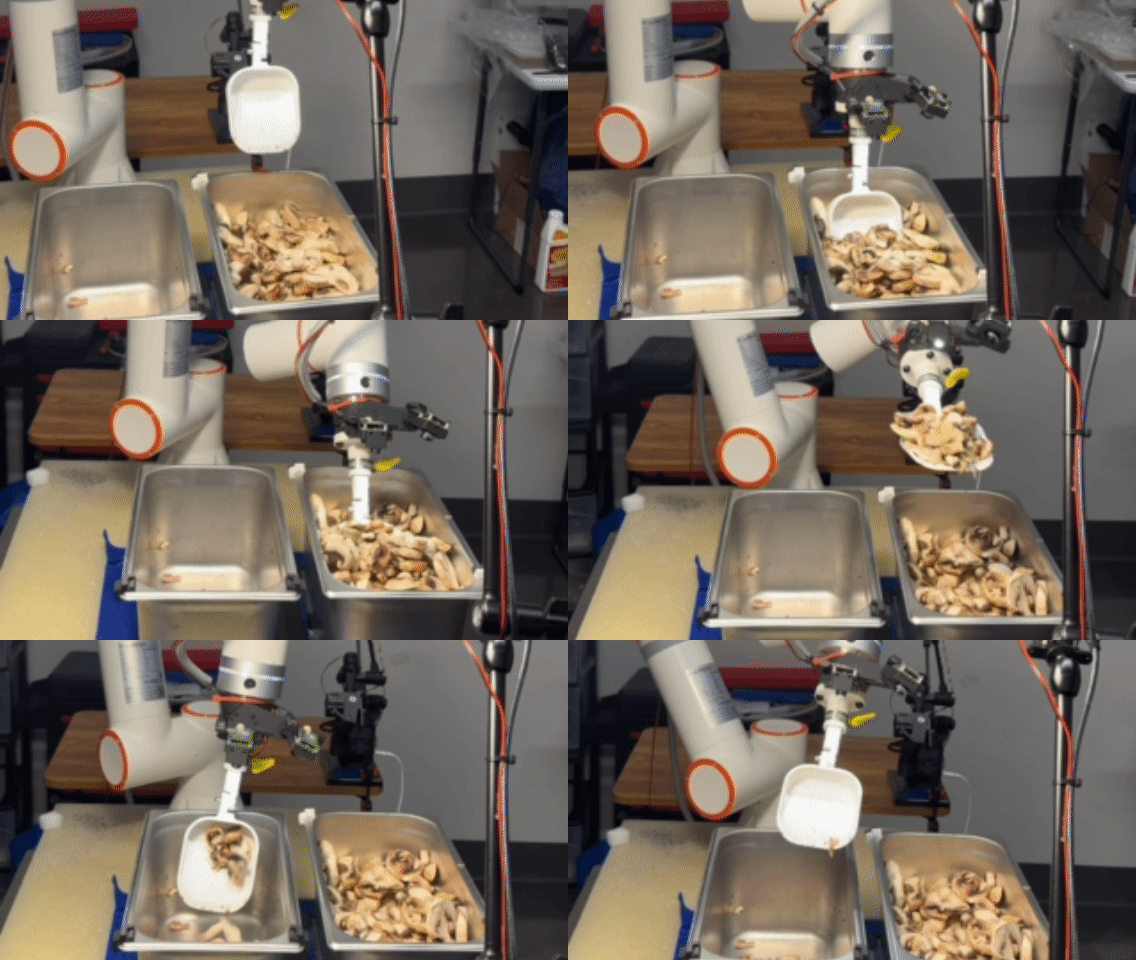
Deformable objects with high variability
(Zip ties, wire handling, film threading, bin picking, picking materials from non-deterministic stacks, variation in material properties)
Benefit: Automate tasks that were previously impractical due to too many possible states
Input: Demonstrate an example motion using the teleoperation kit. Add a text description with relevant dimensions, distances, and other key parameters.
Output: The AI integrator moves the robot to collect training data and sets up the continuous learning pipeline for the task.

Tasks that require reasoning during execution
(Workspace cleanup, sorting, performing a task from a text prompt)
Benefit: Handle new task variations without reprogramming
Input: Briefly describe the task in free form.
Output: The AI integrator will control the robot directly, analyzing the current scene and reasoning about the next step. No code needed. It can be slow and use a lot of tokens.
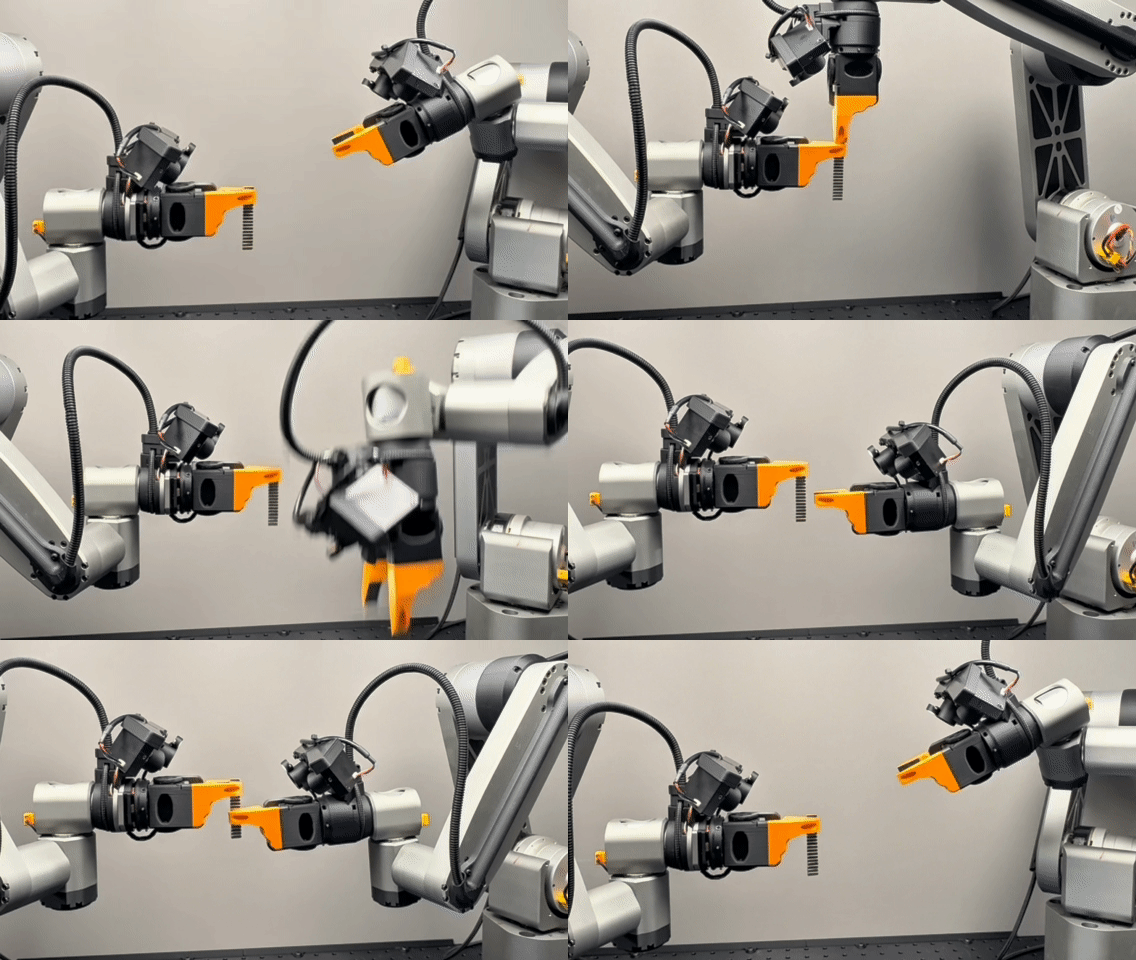
Complex repetitive motions
(operations with an object in a fixed holder, painting, sanding)
Benefit: Program complex trajectories in seconds
Input: Use the teleoperation kit to record complex motions in seconds. The robot can then repeat them identically.
Output: The robot repeats the recorded motion. Small variations are handled by the gripper’s compliance mechanism.


Features
Built-in AI integrator powered by frontier models
Built on frontier models from Anthropic and OpenAI, the AI integrator can:
Control the robot directly to perform tasks.
Move the robot arm through the environment for 3D reconstruction.
Move the robot to collect training data for small, task-specific local models.
Write and test programs based on advanced computer vision algorithms.
Adapt the gripper and tooling for each task and prepare files for 3D printing.
risks and limitations
We work with frontier models that are developing very quickly, which comes with risks and limitations. Some tasks work well out of the box, while others require human involvement.
We provide a 30-day money-back guarantee after the robot is fully delivered. If the robot doesn’t meet your expectations, you can return it for a full refund.
products

Robotic Kit
$9500
Robotic kit without a box frame and robotic arms.
5x cameras (global shutter)
2x teleoperation controllers
2x gripper with built-in compliance for precise operations
Control box
Pedals, camera stand, camera light

microfactory v1.0
$29.500
Two-arm robotic cell for product assembly
Robotic Kit for two arms
2x Fairino FR3 industrial robot arms. Installed and configured.
Optical breadboard for setup reproduction
Box-shaped frame
Overhead lighting
5-year license for local inference. (Limited offer)